Types of Public Speech
1. INFORMATIVE SPEECHES
– involve a knowledgeable speaker transferring some of
their knowledge to their audience.
KEY TERMS
– A Speaker should be very knowledgeable about the topic
– The topic can be the range from a detailed method to an abstract concept
– Narrower topics makes comprehensible speeches.
– Practice any speech multiple times
Four distinct categories of topic:
- Things,People or places
- Methods
- Events
- ideas
2. PERSUASIVE SPEECHES
– A Speaker attempts to persuade the audience to adopt
his/her position in relation to a topic
KEY POINTS:
– INTENDS to persuade the audience to adopt the position of the speaker
Know your Audience
An Appeal to used to show the characters of the speaker and make him/her more credible
– The core of a persuasive speeches is pair appealing to and audience feelings.
INFORMATIVE VS. PERSUASIVE SPEECHES
Many speeches will contain elements of both informative and Persuasive speeches.
Key points
* an informative speech aims to inform the audience about a specific topic
* a persuasive speech aims to persuade the audience to perform a certain action or convince the audience
* many speeches will combine features of the two speeches
* know your audience
* considering the purpose of the speech
3. Speeches for Special Occasions
– Some special occasions required speeches that are different that
speeches owned at informing or persuading audiences.
KEY POINTS
– Tends to be shorter speeches, commonly less than ten minutes
– commonly addressed to a particular audience
– Defending on the context it could be Funny or Sad.
1. INFORMATIVE COMMUNICATION
– tends to share knowledge and attempt to present an objective that is truthful and unbiased
2. PERSUASIVE COMMUNICATION
– MAY BE DEFINED AS THE PROCESS THROUGH WHICH PEOPLE ATTEMPT TO INFLUENCE THE BELIEFS OR ACTIONS OF OTHER
3. ARGUMENTATIVE COMMUNICATION
– It is a undefying Argumentative individuals advocate positions on instrumental issues and verbally attack
other people’s contradicted perspectives.

1. Speaking to inform (Informative)
– when the speaker is presenting interesting facts or lessons to the audience or explain how to go about doing something.
2. Speaking to Persuade, Motivate pr Take Action
– This is when speaker will try influencing the audience in some
way this speaker might be trying to change your mind absent
something to persuade you to change your opinion to motivate to change a behavior or to take action
3. Speaking to Entertain
– this type of speaking is often found at events like banquets, weddings or
dinners this speaker is usually sharing a funny story or their anectodal information.
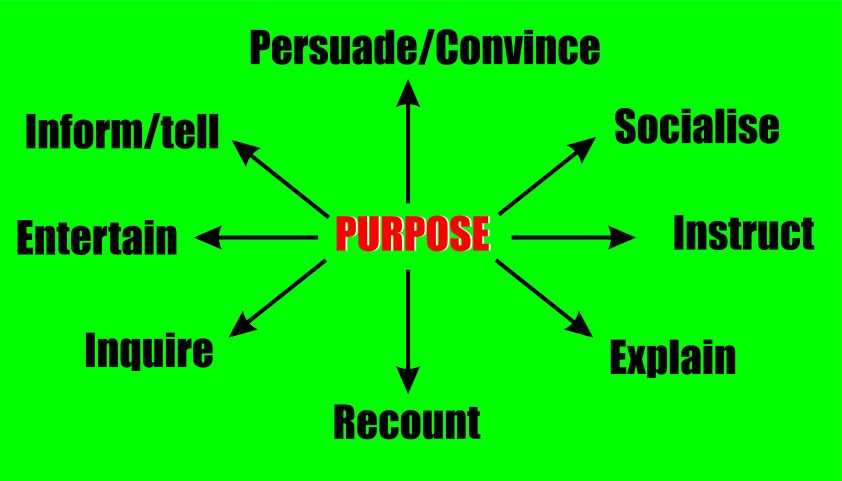
 Purposive Communication